
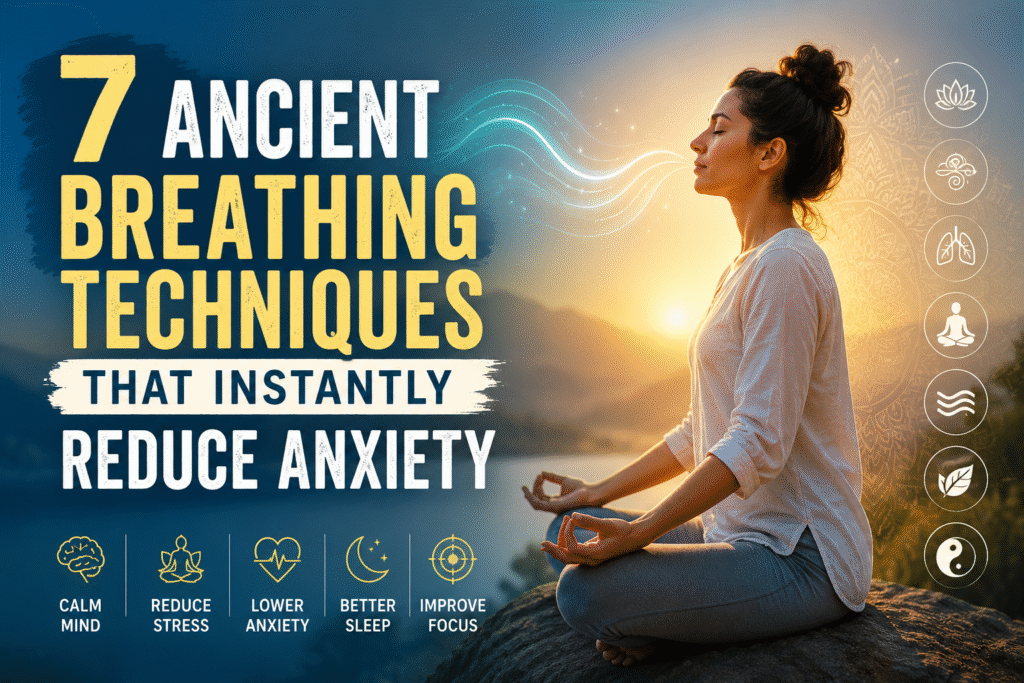
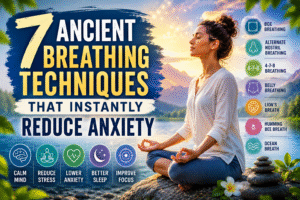
7 Ancient Breathing Techniques That Instantly Reduce Anxiety.
In today’s fast-moving world, anxiety has become a daily struggle for millions of people. Constant notifications, work pressure, financial stress, and lack of sleep can leave the mind overwhelmed and exhausted. But long before modern medicine existed, ancient civilizations discovered powerful breathing methods to calm the nervous system naturally.
These ancient breathing techniques are simple, free, and incredibly effective. Just a few minutes of conscious breathing can slow your heart rate, relax your muscles, and instantly bring peace to your mind.
In this guide, you’ll discover 7 ancient breathing techniques that instantly reduce anxiety, improve focus, and help you regain emotional balance naturally.
________________________________________
Why Breathing Controls Anxiety
When you feel anxious, your body enters “fight or flight” mode. Your breathing becomes shallow and fast, which signals danger to your brain.
Deep, controlled breathing does the opposite:
• Slows the heart rate
• Reduces cortisol (stress hormone)
• Relaxes muscles
• Improves oxygen flow
• Activates the parasympathetic nervous system
Ancient yogis and meditation masters understood this thousands of years ago. Modern science now confirms their wisdom.
________________________________________
1. Box Breathing (The Ancient Warrior Calm Technique)
Box breathing was practiced by ancient monks and warriors to maintain calmness during stressful situations.
How to Do It
Follow this breathing pattern:
1. Inhale for 4 seconds
2. Hold for 4 seconds
3. Exhale for 4 seconds
4. Hold again for 4 seconds
Repeat for 5 minutes.
Benefits
• Instantly calms the mind
• Improves focus
• Reduces panic feelings
• Stabilizes emotions
Best Time to Practice
• Before sleep
• During panic attacks
• Before exams or interviews
________________________________________
2. Alternate Nostril Breathing (Nadi Shodhana)
This ancient yogic breathing method balances the left and right hemispheres of the brain.
It is one of the most powerful ancient breathing techniques that instantly reduce anxiety and mental overthinking.
How to Practice
1. Sit comfortably
2. Close your right nostril with your thumb
3. Inhale slowly through the left nostril
4. Close the left nostril
5. Exhale through the right nostril
6. Inhale through the right
7. Exhale through the left
Continue for 5–10 minutes.
Benefits
• Reduces stress instantly
• Improves concentration
• Balances emotions
• Helps with insomnia
________________________________________
3. 4-7-8 Breathing Method
Popularized by breathing experts but rooted in ancient pranayama practices, this method works like a natural tranquilizer for the nervous system.
Steps
1. Inhale through the nose for 4 seconds
2. Hold the breath for 7 seconds
3. Exhale slowly through the mouth for 8 seconds
Repeat 4–8 cycles.
Why It Works
The extended exhale signals safety to your brain, reducing anxiety almost immediately.
Benefits
• Helps you fall asleep faster
• Slows racing thoughts
• Reduces sudden anxiety
• Relaxes the body deeply
________________________________________
4. Belly Breathing (Diaphragmatic Breathing)
Babies naturally breathe using their diaphragm. As adults, stress causes shallow chest breathing.
Belly breathing restores the body’s natural relaxation response.
How to Practice
1. Place one hand on your chest
2. Place the other on your stomach
3. Inhale deeply through the nose
4. Feel your belly rise
5. Exhale slowly through the mouth
Practice for 10 minutes daily.
Benefits
• Reduces tension
• Lowers blood pressure
• Improves oxygen intake
• Instantly calms the nervous system
________________________________________
5. Lion’s Breath (Simhasana Breathing)
This unusual breathing technique comes from ancient yoga traditions and is excellent for releasing emotional stress.
Steps
1. Sit comfortably
2. Inhale deeply through the nose
3. Open your mouth wide
4. Stick out your tongue
5. Exhale forcefully while making a “ha” sound
Repeat 5–7 times.
Benefits
• Releases stored tension
• Reduces frustration and anger
• Energizes the mind
• Relieves jaw and facial stress
________________________________________
6. Humming Bee Breath (Bhramari Pranayama)
This ancient Indian breathing method creates a calming vibration in the brain.
How to Practice
1. Sit quietly
2. Close your eyes
3. Inhale deeply
4. Exhale while making a gentle humming sound like a bee
Practice for 5 minutes.
Benefits
• Instantly reduces anxiety
• Calms an overactive mind
• Improves mood
• Helps during emotional overwhelm
Many people feel calmer after just one minute.
________________________________________
7. Ocean Breath (Ujjayi Breathing)
Known as the “victorious breath,” this ancient yogic technique is commonly used during meditation and yoga practice.
Steps
1. Inhale slowly through the nose
2. Slightly tighten the throat
3. Exhale slowly while creating a soft ocean-like sound
Keep the breath smooth and controlled.
Benefits
• Increases mindfulness
• Reduces stress hormones
• Enhances mental clarity
• Improves emotional control
________________________________________
How Long Does It Take for Breathing Techniques to Work?
Most people feel calmer within 1–5 minutes.
However, consistent practice provides deeper long-term benefits such as:
• Lower anxiety levels
• Better sleep
• Improved emotional balance
• Stronger focus
• Reduced panic attacks
Even 10 minutes daily can transform your mental health.
________________________________________
Tips to Get the Best Results
1. Practice Daily
Consistency matters more than duration.
2. Use a Quiet Space
A calm environment improves concentration.
3. Sit Comfortably
You don’t need special equipment.
4. Avoid Forcing the Breath
Breathing should feel smooth and natural.
5. Combine with Meditation
Breathing plus meditation creates stronger relaxation effects.
________________________________________
Common Mistakes Beginners Make
• Breathing too fast
• Holding the breath excessively
• Practicing immediately after eating
• Giving up too quickly
• Forcing deep breaths unnaturally
Slow and gentle breathing works best.
________________________________________
Scientific Research on Breathing and Anxiety
Recent studies show controlled breathing can directly affect the vagus nerve and nervous system regulation.
Research suggests mindful breathing may help:
• Reduce anxiety symptoms
• Lower cortisol levels
• Improve heart rate variability
• Enhance emotional regulation
This explains why ancient breathing practices remain effective even today.
________________________________________
Final Thoughts
Ancient breathing practices are simple tools with life-changing benefits. They require no medication, no expensive equipment, and only a few minutes each day.
If anxiety often controls your life, start with just one technique today.
Among all the methods listed, Alternate Nostril Breathing and 4-7-8 Breathing are especially powerful for beginners.
The next time stress overwhelms you, remember this:
Your breath is one of the fastest ways to calm your mind naturally.
________________________________________
FAQs
Which breathing technique works fastest for anxiety?
The 4-7-8 breathing method often provides the quickest calming effect for sudden anxiety.
Can breathing exercises stop panic attacks?
They can significantly reduce panic symptoms by slowing the nervous system response.
How many times should I practice daily?
1–2 sessions daily for 5–10 minutes is enough for beginners.
Are breathing exercises safe for everyone?
Most are safe, but people with respiratory conditions should consult a healthcare professional before intense breathwork.
Can breathing techniques improve sleep?
Yes. Techniques like 4-7-8 breathing and belly breathing are highly effective for improving sleep quality.