Evidence-led health • practical wellness • smarter everyday choices
Nail & Skin Care • Independent Review

Kerassentials Reviews 2026: What the Label, the Science and the Price Really Show

Kerassentials is a 15 ml topical oil marketed for healthy-looking nails and skin, mainly toenails. It combines undecylenic acid (5%) with sixteen other oils, extracts and additives. We read the bottle label, checked every ingredient against NIH, FDA and clinical sources, and worked out what each package really costs per day.

Disclosure: This is an independent review, not the official Kerassentials website. We earn a commission if you buy through our links, at no extra cost to you, and that does not change what we report. We have not used or lab-tested the product ourselves. Educational information only, not medical advice. See our affiliate disclosure.

Check Current Offer at the Seller
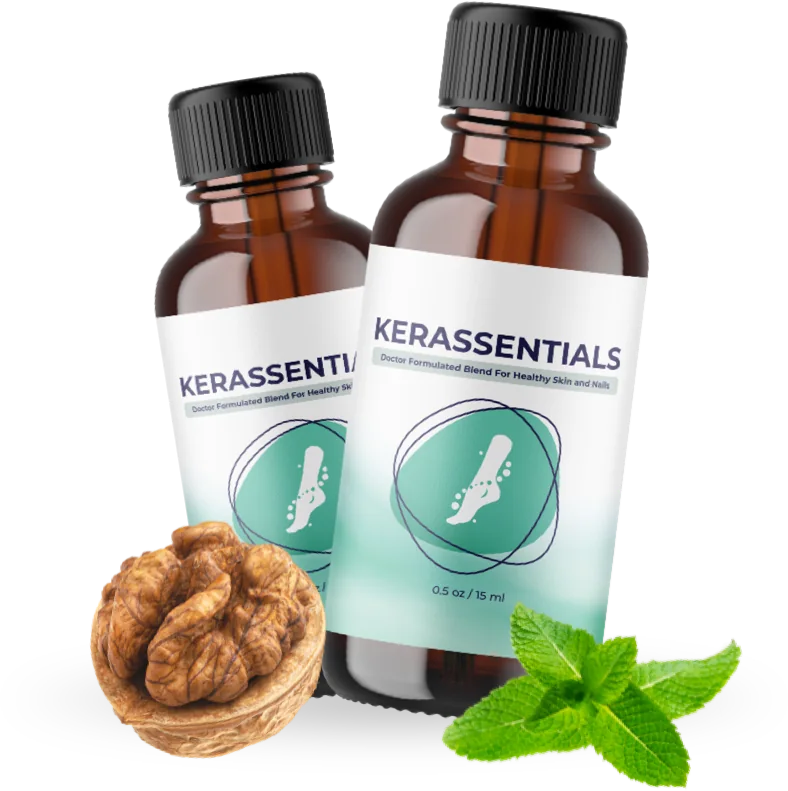
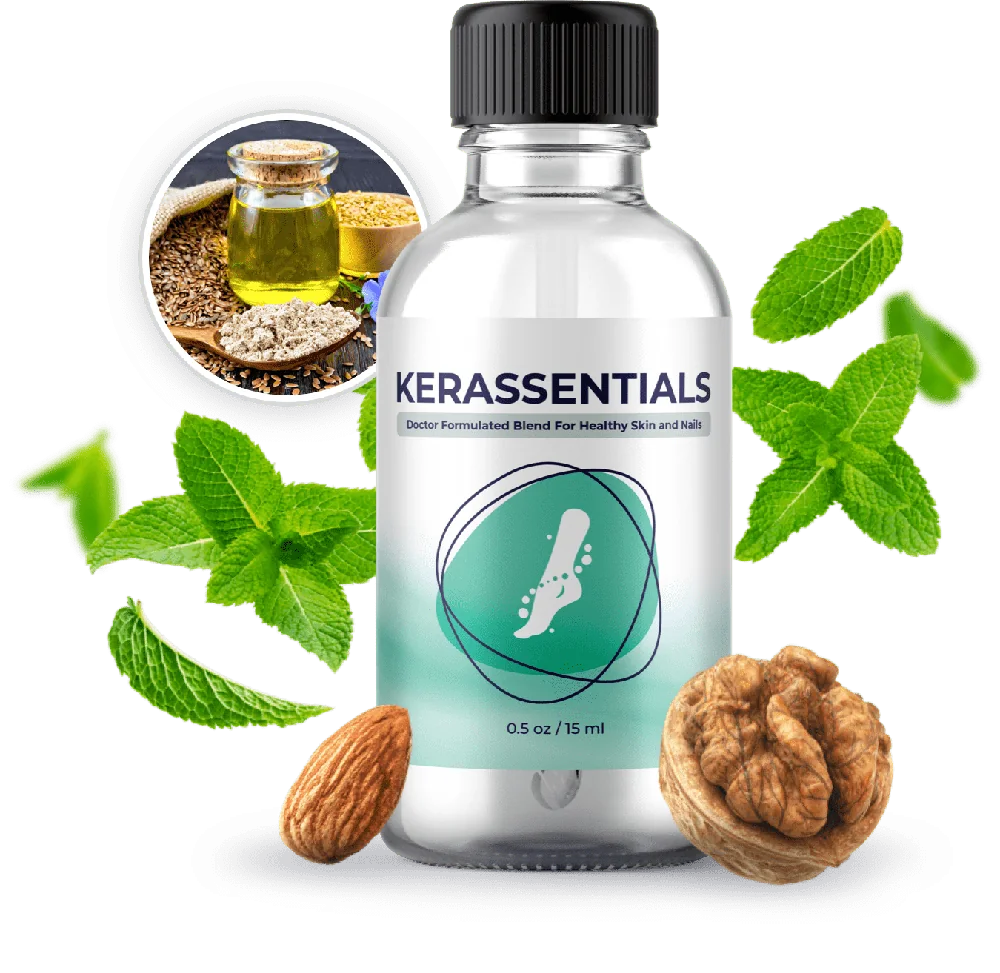
Kerassentials 15 ml topical oil bottle with flaxseed oil, almond, walnut and mint

Product artwork supplied for this review. Confirm the current bottle label and package contents with the seller.

0.5 oz / 15 mlBottle size on the label
5% activeUndecylenic acid USP, per label
17 ingredientsOnly one has a stated amount
from $1.63/dayLargest pack, our calculation
At a glance

Our Quick Verdict on Kerassentials

  • What it is: an external-use oil for nails, cuticles and surrounding skin. Not a pill, and not something to swallow.
  • Evidence: in our research we found no published clinical trial of Kerassentials itself. Several ingredients have lab or limited research, but none of it proves the finished oil clears nail fungus.
  • Biggest unknown: the label discloses the strength of one ingredient (undecylenic acid, 5%) and none of the other sixteen, including six essential oils.
  • Most realistic benefit: conditioning and moisturizing dry nails and cuticles, plus a daily routine that makes you inspect your feet.
  • Main risks: skin irritation or allergy from essential oils, menthol and camphor, and tree-nut oils (almond, walnut) for people with nut allergies.
  • Value: $1.63 to $2.80 a day depending on the pack, using the seller’s own 30-days-per-bottle figure. A 60-day refund is advertised, but its terms were not supplied.
  • Who should skip it: anyone with a thick, painful or spreading nail problem, diabetes, poor circulation or a nut or essential-oil allergy should speak to a clinician first.
Product overview

What Is Kerassentials?

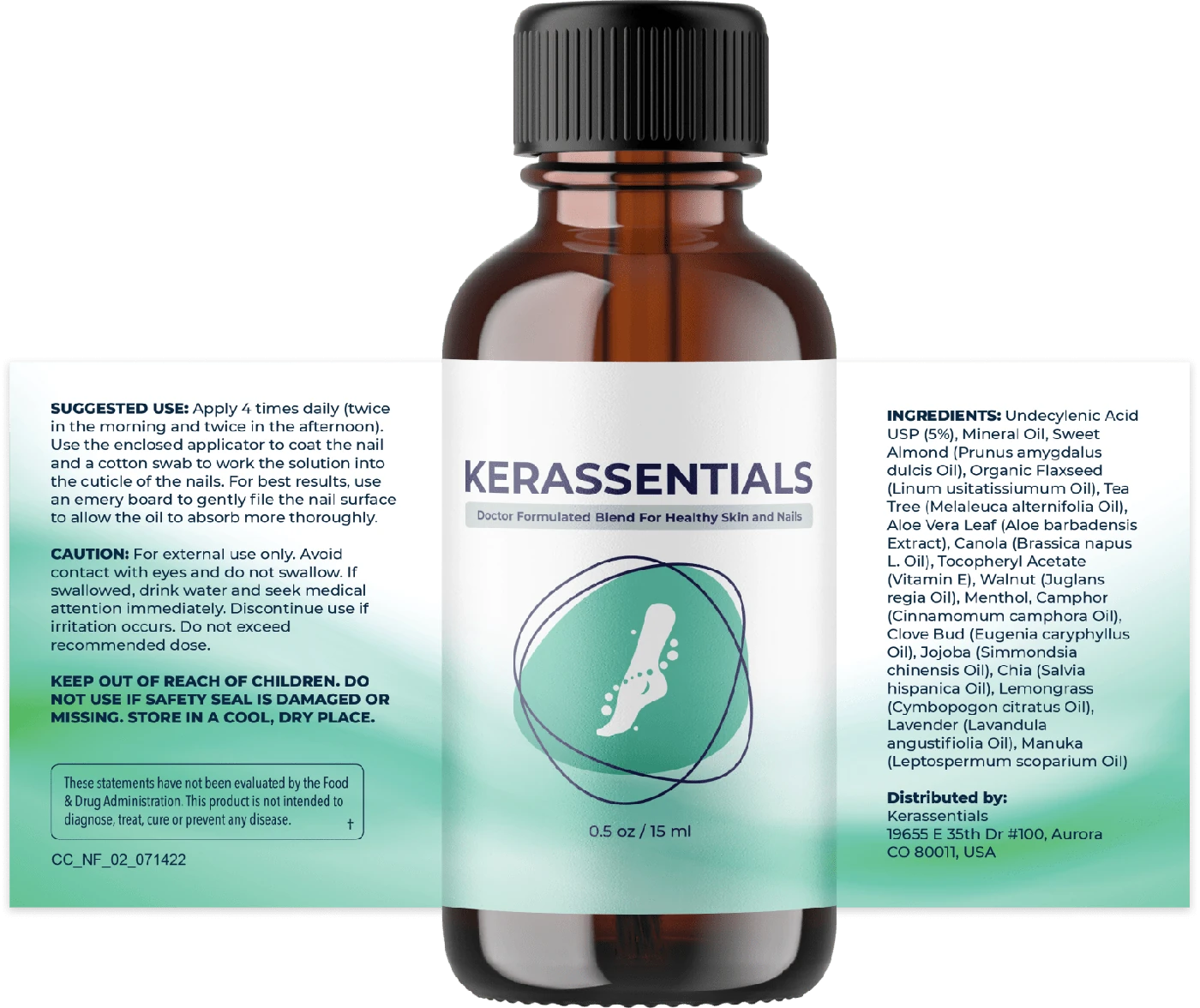
Kerassentials is sold online as an oil you brush onto the nail and work into the cuticle. The front of the bottle reads “Doctor Formulated Blend For Healthy Skin and Nails,” and the artwork shows a foot. Many affiliate sites describe it as a toenail-fungus product, but the label itself does not say that.

The back of the bottle gives the directions (apply four times daily), a caution to avoid eyes and not swallow, the standard FDA disclaimer that its statements have not been evaluated by the Food and Drug Administration and that it is not intended to diagnose, treat, cure or prevent any disease, and a distributor name and address in Aurora, Colorado. No doctor is named, so the “doctor formulated” wording cannot be verified from the label.

Kerassentials bottle label showing suggested use, caution, ingredients and distributor

Label image supplied for this review. Compare it with the bottle you receive.

Transparency

How We Reviewed Kerassentials

What we did

  • Read the supplied bottle label and the seller’s pricing graphic line by line.
  • Checked each of the 17 ingredients against government and clinical sources: NIH (NCCIH, Office of Dietary Supplements, LiverTox, MedlinePlus), the FDA, Mayo Clinic and the American Academy of Dermatology.
  • Calculated price per day and per ml ourselves from the seller’s own supply figures.
  • Separated what the label says, what the seller advertises and what research supports.

What we did not do

  • We did not purchase, use or laboratory-test the product, so we offer no personal results or before-and-after photos.
  • We did not independently verify the formula, manufacturing, testimonials or refund handling.
  • We did not copy other reviews. Where other sites disagree on price or refund terms, we say that figures must be confirmed at checkout.

Health information needs to be accurate and consistent with expert consensus, so every claim about an ingredient below links to its source. If you find an error or a newer study, please tell us and we will review and correct the page. Our standards are set out in the editorial policy.

Ingredient-by-ingredient research

Kerassentials Ingredients: All 17, Checked Against the Research

The label lists the ingredients below in this order, but only undecylenic acid has a stated amount (5%). Each card says what the ingredient is there for, what authoritative sources say, and the main safety point, with links so you can read the source yourself. The coloured tag shows how far the evidence goes for nails.

Active, strength statedLab or limited evidenceIrritation or allergy cautionEmollient / carrier

1. Undecylenic Acid USP (5%)

Only stated strength

Role in the formula: The label’s only ingredient with a disclosed amount, and the one most likely to be described as the “active.” It is a fatty acid used in some over-the-counter antifungal products.

What the research says: FDA’s antifungal ingredient rule lists undecylenic acid and its salts at a total undecylenate concentration of 10 to 25 percent. At 5%, this label is below that listed range, and the rule does not say any product is approved for toenail fungus. Published lab work includes a study on Candida albicans biofilm, which is a different organism in a lab dish, not a trial in people with nail fungus.

Safety note: The label says to stop use if irritation occurs. Keep away from eyes.

Research links: FDA antifungal ingredients rule, 21 CFR 333.210 · Undecylenic acid and Candida albicans biofilm (laboratory study) · PubChem: undecylenic acid

2. Tea Tree Oil (Melaleuca alternifolia)

Most studied oil, nail evidence insufficient

Role in the formula: An essential oil traditionally used for its antimicrobial properties and its aroma.

What the research says: The U.S. National Center for Complementary and Integrative Health (NCCIH) says the amount and quality of research on tea tree oil for nail fungus is insufficient to reach any conclusions, and that for athlete’s foot it may not work as well as standard treatments. A small trial used tea tree oil together with butenafine cream, so it cannot show what the oil does alone. The American Academy of Dermatology notes tea tree oil has only been studied in small trials.

Safety note: NCCIH says some people develop redness or irritation. It should never be swallowed. The amount in this formula is not disclosed.

Research links: NCCIH: Tea Tree Oil · Syed et al., tea tree oil plus butenafine cream, Mycoses · American Academy of Dermatology: Nail fungus, diagnosis and treatment

3. Clove Bud Oil

Irritation caution

Role in the formula: An aromatic oil, roughly 70 to 90 percent eugenol, added for scent and traditional topical use.

What the research says: The NIH LiverTox database says there is no convincing data to support the effectiveness of clove oil for medical uses and that it is not approved for any medical condition in the U.S. At low topical concentrations it mainly causes local irritation, rare allergic reactions and contact dermatitis.

Safety note: Serious toxicity has been reported after accidental swallowing, mostly in children, so store the bottle out of reach.

Research links: LiverTox: Eugenol (Clove Oil), NCBI Bookshelf · Poison Control: Essential oils, poisonous when misused

4. Lavender Oil

Allergy caution

Role in the formula: A fragrant essential oil used for scent and skin-care feel.

What the research says: NCCIH states that more high-quality research is needed to reach reliable conclusions about lavender, and that topical lavender products may cause allergic skin reactions in some people. Its research is mostly on aromatherapy and oral use, not on nails.

Safety note: Essential oils are a known cause of allergic contact dermatitis. A small patch test before first use is sensible.

Research links: NCCIH: Lavender · Allergic contact dermatitis following exposure to essential oils

5. Lemongrass Oil

Mostly lab and animal research

Role in the formula: An essential oil with a strong citrus-like aroma.

What the research says: Preclinical research reports antifungal and anti-inflammatory activity in lab models, and an animal study has examined its skin irritation. None of this shows that the oil changes an infected human nail. Essential oils as a group are tested for skin sensitization potential in standard assays.

Safety note: Lemongrass oil is generally treated as a possible skin sensitizer, so stop use if burning, itching or a rash appears.

Research links: Lemon grass essential oil: anti-inflammatory and antifungal research · Skin irritation study of Cymbopogon citratus essential oil in mice and rabbits · Dermal sensitization potential of essential oils, local lymph node assay

6. Manuka Oil

Lab-only evidence

Role in the formula: An essential oil from the Leptospermum scoparium shrub, related to tea tree oil.

What the research says: The research we found is in vitro (laboratory) work on manuka and kanuka oils against microorganisms. We found no human trial of manuka oil on nail fungus.

Safety note: Treat it like other essential oils: it can irritate or sensitize skin in some people.

Research links: Kanuka and manuka essential oils, in vitro study

7. Menthol

Cooling agent, skin-irritation caution

Role in the formula: Gives the oil a cooling sensation. Menthol is the main component of peppermint oil.

What the research says: NCCIH says topical peppermint oil has limited evidence for a few uses such as tension headache. Nothing in that source supports menthol as a nail-fungus treatment.

Safety note: NCCIH warns that applying peppermint oil to the skin can cause rashes and irritation, and that menthol should not be applied to the face of an infant or small child because it may affect breathing.

Research links: NCCIH: Peppermint Oil

8. Camphor Oil (Cinnamomum camphora)

Keep away from children

Role in the formula: Adds a warming, medicinal sensation. Camphor is also an active ingredient in some pain-relief rubs.

What the research says: In the U.S., camphor is regulated as an active ingredient in over-the-counter external analgesic (pain-relief) products under an FDA monograph. We found no source showing that camphor helps nail fungus.

Safety note: MedlinePlus lists seizures, vomiting and burning of the mouth among the harmful effects of swallowing or misusing camphor. If swallowed, call Poison Help at 1-800-222-1222. This bottle is for external use only.

Research links: MedlinePlus: Camphor overdose · FDA OTC Monograph M017: External Analgesic Drug Products

9. Mineral Oil

Emollient base

Role in the formula: The main carrier that holds the other ingredients and leaves a protective film on skin.

What the research says: FDA lists mineral oil (50 to 100 percent) as a skin protectant active ingredient. Moisturizers like this work by reducing water loss from the skin, which can soften dry cuticles. That is conditioning, not antifungal action.

Safety note: Generally well tolerated, but it can feel greasy and may stain fabric.

Research links: FDA skin protectant ingredients rule, 21 CFR 347.10 · StatPearls: Moisturizers

10. Sweet Almond Oil (Prunus amygdalus dulcis)

Tree-nut allergen

Role in the formula: An emollient plant oil that softens skin.

What the research says: Plant oils such as almond are studied for skin barrier and moisturizing effects, mostly on skin rather than nails.

Safety note: FDA lists tree nuts, including almonds and walnuts, among the major food allergens, and reactions can be severe. If you have a tree-nut allergy, ask a clinician before using a product with nut oils.

Research links: FDA: Food Allergies, What You Need to Know · Anti-inflammatory and skin barrier repair effects of topical plant oils

12. Organic Flaxseed Oil (Linum usitatissimum)

Not nail-specific

Role in the formula: A plant oil rich in alpha-linolenic acid (ALA), added as a moisturizing carrier.

What the research says: NCCIH’s fact sheet covers flaxseed oil taken by mouth and does not address topical use, so we found no authority source on its effect when applied to nails.

Safety note: No specific warning on this label, but follow the general patch-test advice.

Research links: NCCIH: Flaxseed and Flaxseed Oil

13. Canola Oil (Brassica napus)

Not nail-specific

Role in the formula: A common plant carrier oil.

What the research says: We did not find an authority source on canola oil applied to nails. Its role is best read as a general emollient.

Safety note: No specific warning on this label.

Research links: StatPearls: Moisturizers

14. Jojoba Oil (Simmondsia chinensis)

Conditioning oil

Role in the formula: A plant liquid wax widely used in skin care as a moisturizing carrier.

What the research says: A published review covers jojoba oil’s chemistry, pharmaceutical uses and toxicity. Its documented role is skin conditioning, not treating nail infections.

Safety note: The review also covers toxicity, and any plant oil can cause an allergic reaction in a few people.

Research links: Jojoba oil: updated review of chemistry, pharmaceutical uses and toxicity · Anti-inflammatory and skin barrier repair effects of topical plant oils

15. Chia Oil (Salvia hispanica)

Not nail-specific

Role in the formula: A plant oil rich in omega-3 fatty acids used as a moisturizing carrier.

What the research says: We did not find an authority source on chia oil applied to nails. General research on plant oils focuses on skin barrier effects.

Safety note: No specific warning on this label.

Research links: Anti-inflammatory and skin barrier repair effects of topical plant oils

16. Aloe Vera Leaf Extract (Aloe barbadensis)

Soothing, not antifungal

Role in the formula: Added for a soothing, moisturizing feel.

What the research says: NCCIH says topical aloe gel is generally well tolerated, with limited evidence for burns and acne. It does not list nail fungus among the uses with evidence.

Safety note: NCCIH notes occasional reports of burning, itching, rash and eczema.

Research links: NCCIH: Aloe Vera

17. Tocopheryl Acetate (Vitamin E)

Conditioning / antioxidant

Role in the formula: A stable form of vitamin E commonly added to skin-care products.

What the research says: The NIH Office of Dietary Supplements fact sheet explains the forms of vitamin E but is about intake from food and supplements, so it does not establish a benefit for nails when applied on the skin.

Safety note: Contact reactions are possible but uncommon; stop use if irritation develops.

Research links: NIH Office of Dietary Supplements: Vitamin E
What this adds up to: one regulated antifungal-type ingredient used below the FDA-listed range, one well-known essential oil whose nail evidence is officially called insufficient, a handful of lab-only oils, and a long list of moisturizing carrier oils. Ingredient research does not automatically carry over to the finished formula, and the undisclosed amounts make it impossible to compare this oil with studied doses.

Kerassentials two bottles with walnut and mint leaves
Evidence check

Does Kerassentials Work for Nail Fungus?

Honest answer: the evidence needed to say yes is missing. Here is why, in four points.

  1. No trial of the product. We found no published human trial of Kerassentials. The FTC says health claims need competent and reliable scientific evidence, and that testimonials are not substantiation.
  2. Nail fungus needs a confirmed diagnosis. Mayo Clinic and the American Academy of Dermatology explain that a clinician may take a nail sample for lab testing, because psoriasis, yeast, bacteria and injury can all look like fungus.
  3. Nails are hard to treat from the outside. A published review notes that the nail’s chemistry and thickness limit how well topical treatments reach the nail bed. MedlinePlus says over-the-counter topical creams and ointments usually do not help.
  4. Natural oils have only small studies. NCCIH calls the research on tea tree oil for nail fungus insufficient, and the American Academy of Dermatology says tea tree oil has only been studied in small trials.

None of this means a nail oil can never help how nails look or feel. It means you should not rely on it to treat an infection, and should see a clinician if you suspect one.

Research links: Mayo Clinic: Nail fungus, diagnosis and treatment · American Academy of Dermatology: Nail fungus, diagnosis and treatment · MedlinePlus: Fungal nail infection · The Penetrance of Topical Nail Therapy: Limitations and Current Enhancements · FTC: Health Products Compliance Guidance

Why the 5% matters: FDA’s antifungal ingredient rule lists undecylenate products at 10 to 25 percent total. Kerassentials states 5%, which is below that range. The rule is about ingredient concentration, not about toenail-fungus approval.

Alternatives

Kerassentials Compared With Proven Options

Readers deserve context, not just a single product. This table compares Kerassentials with options described by the American Academy of Dermatology, Mayo Clinic and MedlinePlus.

OptionWhat it isWhat the sources sayNeeds a clinician?
KerassentialsNon-prescription topical oil, 4 applications a dayNo published trial of the finished product found. Ingredient evidence is mostly lab or limited.Not to buy, but a diagnosis is advised
Prescription topicalsEfinaconazole 10%, tavaborole 5%, ciclopirox lacquerEfinaconazole and tavaborole are FDA-approved for toenail fungus and are applied daily for about 48 weeks (AAD).Yes
Oral antifungalsTerbinafine, itraconazoleTypically 6 to 12 weeks of treatment; liver tests may be needed; the nail can take a year or more to grow out fully (AAD, Mayo, MedlinePlus).Yes
Other OTC creamsAntifungal creams for skinOTC terbinafine cream treats athlete’s foot but cannot penetrate the nail to treat nail fungus (AAD).No, but it is for skin infections only
Natural oils (tea tree and others)Essential oils in various productsSmall trials only, so effectiveness and side effects are unknown (AAD, NCCIH).Advised before relying on them

Research links: American Academy of Dermatology: Nail fungus, diagnosis and treatment · Mayo Clinic: Nail fungus, diagnosis and treatment · MedlinePlus: Fungal nail infection · NCCIH: Tea Tree Oil

Kerassentials Pros and Cons

✅ Pros

  • Full ingredient list on the label. You can check every ingredient yourself, and the active’s strength (5%) is shown.
  • Clear directions. Frequency and method of application are spelled out.
  • Simple, non-oral product. It is applied externally, so it avoids the liver-monitoring needs of oral antifungals.
  • Conditioning base. Mineral, jojoba, almond and other oils can soften dry cuticles.
  • Refund advertised. A 60-day money-back guarantee is shown on every pack.
  • Falls to $1.63 a day on the largest pack.

❌ Cons

  • No trial of the finished product. Nothing we found shows it clears nail fungus.
  • 5% is below the FDA-listed range for undecylenate antifungal products (10 to 25%).
  • Sixteen amounts undisclosed. You cannot tell how much tea tree, clove or camphor you are applying.
  • Several irritants and allergens: essential oils, menthol, camphor and two tree-nut oils.
  • Demanding routine. Four applications a day for months.
  • Strong marketing claims in the bonus guides that we cannot verify.

How to Use Kerassentials (From the Label) and Practical Tips

The label says: apply 4 times daily, twice in the morning and twice in the afternoon. Use the enclosed applicator to coat the nail and a cotton swab to work the solution into the cuticle. For best results, gently file the nail surface with an emery board so the oil can absorb more thoroughly.

  1. Patch test first. Put a small amount on a small area of skin and wait to see if redness, itching or burning develops before using it on the nail.
  2. Keep a simple progress log. Take a photo of the nail once a month in the same light. Slow nail growth makes memory a poor judge of change.
  3. Do not stack products. If a clinician prescribes a treatment, ask whether it is fine to use an oil alongside it.
  4. Use a separate emery board for infected-looking nails so you do not spread a possible infection to others.
  5. Know your stop point. If a nail is not improving, or gets thicker, painful or discolored, book a clinician appointment rather than buying more.

Using the seller’s own figure of one 15 ml bottle per 30 days, the label routine uses roughly half a millilitre a day. A routine this demanding only helps if you can keep it up, so be realistic before choosing a 6-bottle pack.

Kerassentials Safety, Side Effects and Storage

Kerassentials is for external use only. The label says to avoid contact with eyes, not to swallow it, and to drink water and seek medical attention immediately if swallowed. It also says to discontinue use if irritation occurs and not to exceed the recommended dose. Skin reactions are the main practical risk, because the formula contains six essential oils (tea tree, clove bud, lavender, lemongrass, manuka and camphor) plus menthol.

Who should speak with a healthcare professional first?

  • Anyone with diabetes, poor circulation, neuropathy or a weakened immune system, because MedlinePlus lists these as higher-risk groups for nail infections.
  • Anyone with a thick, painful, discolored, crumbling or separating nail, or with spreading redness, swelling or discharge.
  • Anyone with eczema, psoriasis or broken skin around the nails. Psoriasis can look like nail fungus.
  • Anyone allergic to tree nuts, essential oils, camphor or menthol, and people who are pregnant, breastfeeding or considering use for a child.

Storage and handling

The label says to keep it out of reach of children, store it in a cool, dry place and not to use it if the safety seal is damaged or missing. Essential oils and camphor can poison children who swallow them, so close the bottle after every use.

Research links: Poison Control: Essential oils, poisonous when misused · MedlinePlus: Camphor overdose · NCCIH: Peppermint Oil · FDA: Food Allergies, What You Need to Know · MedlinePlus: Fungal nail infection

Package options

Kerassentials Price Per Day and Package Options

The supplied pricing graphic shows three packages. The table below turns the seller’s own figures into a cost per day and per millilitre, which makes packs easy to compare. These are our calculations, not live checkout prices, so confirm the total, shipping and taxes before paying.

PackageVolumeSupply (as advertised)Per bottleTotal shownCost per dayCost per ml
2 bottles2 × 15 ml60 days$79$167.99 (incl. $9.99 shipping)$2.80$5.60
2 + 1 bottles3 × 15 ml90 days$69$207.00 (free shipping)$2.30$4.60
3 + 3 bottles6 × 15 ml180 days$49$294.00 (free shipping)$1.63$3.27
Try Two

2 Bottles

60-day supply (as advertised)

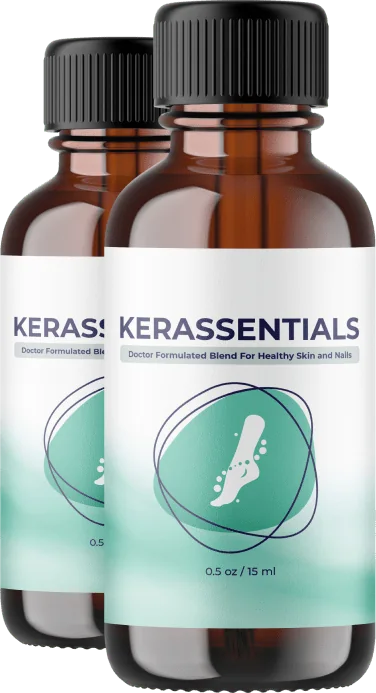
Kerassentials two-bottle package
$79 / bottle

$158 package total shown (struck-through $358).

$9.99 shipping shown.

Check Current Price
Most Popular

2 + 1 Bottles

90-day supply (as advertised)

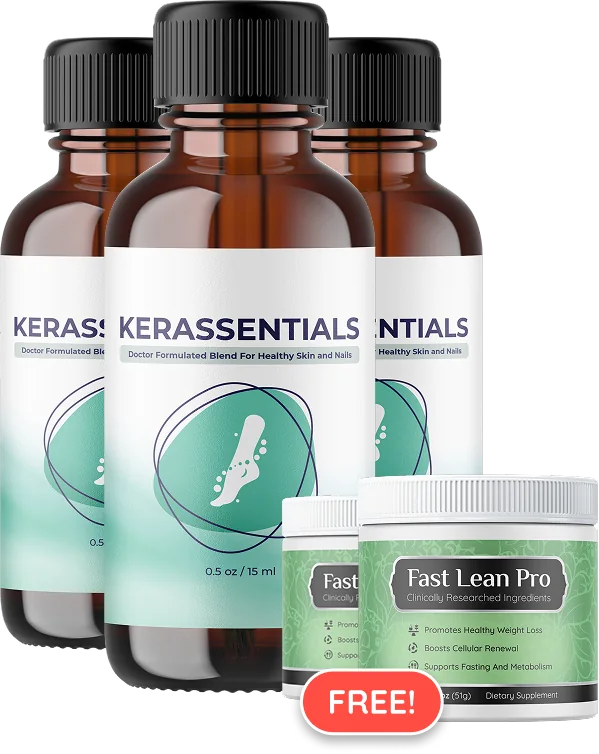
Kerassentials three-bottle package with free Fast Lean Pro
$69 / bottle

$207 package total shown (struck-through $537).

Free shipping and a surprise gift shown.

Check Current Price

Check before you pay: the graphic shows struck-through “regular” totals of $358, $537 and $1,074 and savings of $200, $330 and $780. Treat these as promotional pricing. Confirm which gifts, ebooks and shipping terms apply to your selected order, and whether any recurring billing is included. The $49 per-bottle rate applies only to the largest pack.

Included materials

Kerassentials Bonus Guides

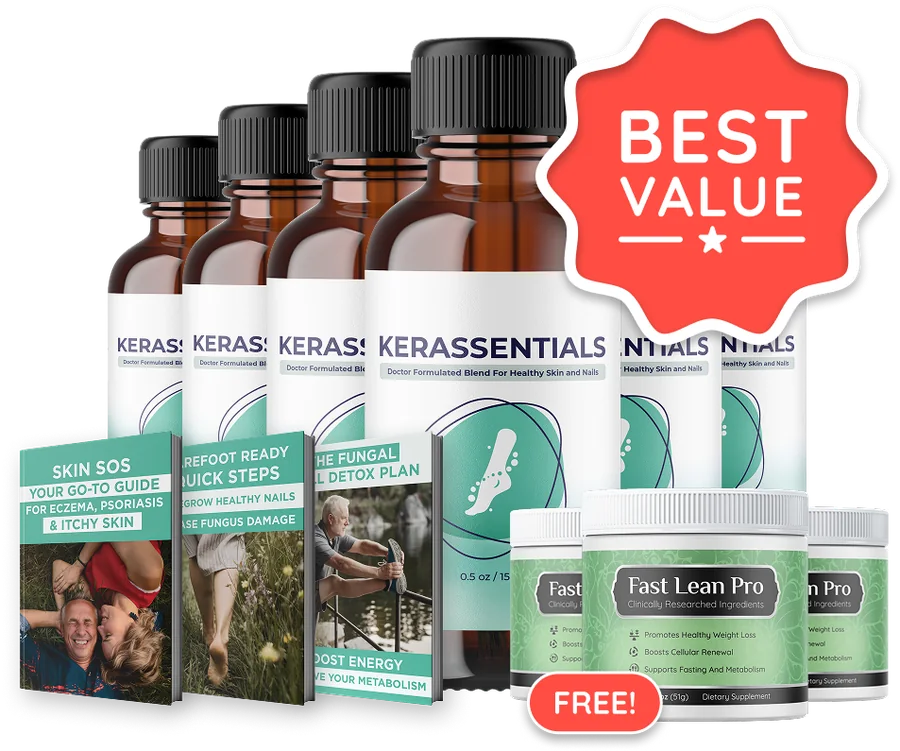
The supplied images show three digital guide covers with the largest package, plus a free Fast Lean Pro jar on the 3-bottle and 6-bottle graphics. Their contents, authorship and evidence base have not been independently verified. Fast Lean Pro is a separate weight-management dietary supplement and is not reviewed here.

The Fungal Full Detox Plan digital bonus cover

The Fungal Full Detox Plan

Shown as a digital download with the subtitle “Boost Energy, Revive Your Metabolism.” Its contents, author and evidence base were not supplied. Treat it as an advertised extra, not as medical treatment.

Barefoot Ready Quick Steps digital bonus cover

Barefoot Ready Quick Steps

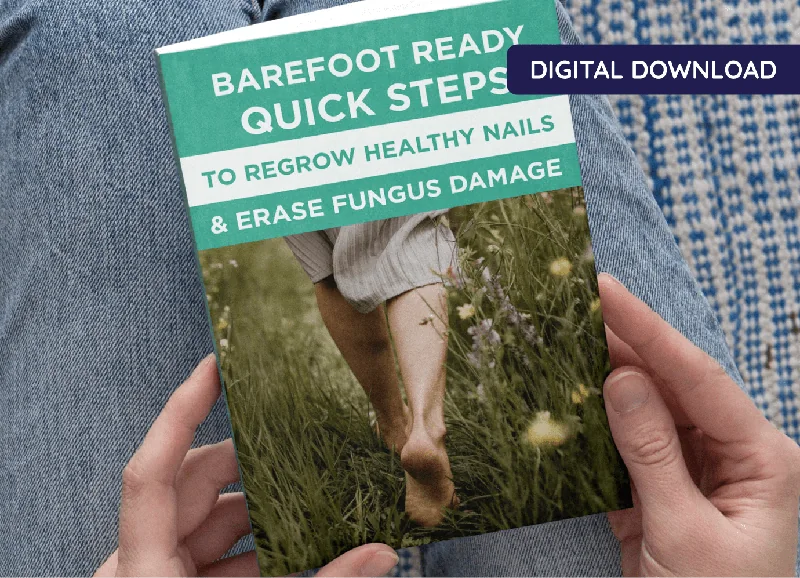
The cover promises steps “to regrow healthy nails and erase fungus damage.” That is a strong promotional claim this page cannot verify, and results from any guide vary.

Skin SOS digital bonus cover

Skin SOS

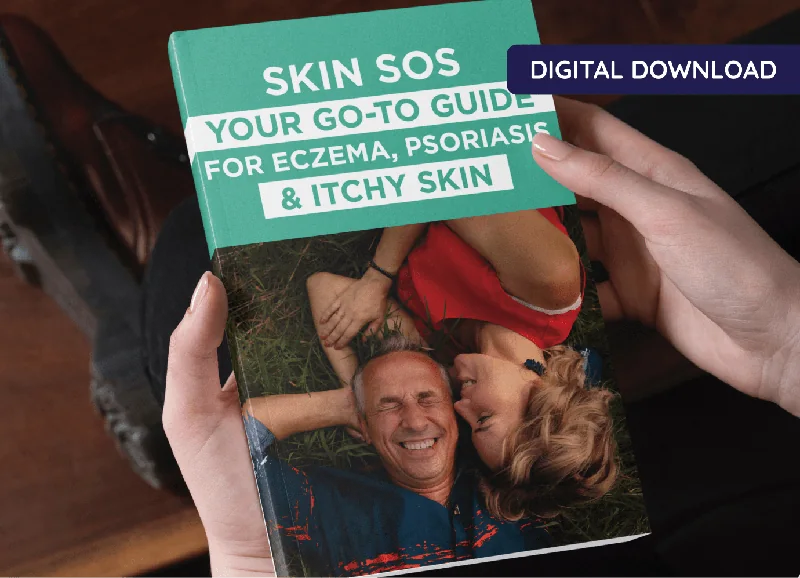
Presented as a go-to guide for eczema, psoriasis and itchy skin. Those are medical conditions that need professional diagnosis and care, so use the guide for general education only.

Purchase protection

Kerassentials 60-Day Money-Back Guarantee

The seller’s pricing graphic lists a 60-day guarantee on all three packages, and a 60-day money-back badge accompanies the offer. The return address, eligibility rules, whether opened bottles qualify, who pays return shipping and how long refunds take were not supplied.

Other reviews we read disagree about when the 60 days start and who pays return shipping. Read the live refund policy, screenshot it, and keep your order confirmation before you buy.

60-day money-back guarantee badge
Customer feedback

What About Kerassentials Customer Reviews?

We did not receive or verify any customer review records for this page, so we do not publish star ratings or testimonials. Many online reviews, including long first-person “honest results” posts, are written by affiliates who earn commissions, and are not evidence of results.

When you read any review of this product, ask: Does the writer disclose that they earn a commission? Is there dated, verifiable proof such as a purchase record? Does it show the weaker points too, such as irritation or no change? The FTC notes that testimonials do not substantiate a health claim, and that dramatic results are likely deceptive even with a “results not typical” disclaimer.

Research links: FTC: Health Products Compliance Guidance

Common questions

Kerassentials FAQ

Is this the official Kerassentials website?

No. HealthyFitsMe is an independent review site. The buttons on this page lead to the seller through an affiliate link, which means we may earn a commission if you buy. That commission does not change what we report about the evidence.

What is Kerassentials?

Kerassentials is a topical oil sold for the care of skin and nails, mostly toenails. The bottle label calls it a “Doctor Formulated Blend For Healthy Skin and Nails” and shows 0.5 oz / 15 ml per bottle. It is for external use only and is not a dietary supplement you swallow.

What ingredients are in Kerassentials?

The label lists 17 ingredients: undecylenic acid USP (5%), mineral oil, sweet almond oil, organic flaxseed oil, tea tree oil, aloe vera leaf extract, canola oil, tocopheryl acetate (vitamin E), walnut oil, menthol, camphor oil, clove bud oil, jojoba oil, chia oil, lemongrass oil, lavender oil and manuka oil. Only the 5% undecylenic acid has a stated strength.

Does Kerassentials treat nail fungus?

We cannot say that it does. The label says the product is not intended to diagnose, treat, cure or prevent any disease, and we found no published clinical trial of the finished product. Clinical sources such as the American Academy of Dermatology and Mayo Clinic describe proven options that a clinician prescribes after confirming the diagnosis.

Is 5% undecylenic acid enough?

The FDA antifungal ingredient rule lists undecylenate products at a total of 10 to 25 percent, so 5% sits below that listed range. That does not prove the oil cannot help, but it means the rule cannot be used as evidence that this strength works.

How do you use Kerassentials?

The label says to apply four times daily (twice in the morning and twice in the afternoon), using the applicator to coat the nail and a cotton swab to work the oil into the cuticle. It also suggests gently filing the nail surface with an emery board so the oil can absorb more thoroughly.

How long does it take to see results?

No product-specific timeline was supplied. Nails grow slowly, and even with prescription treatment a clear new nail can take up to a year to grow out, according to MedlinePlus and the American Academy of Dermatology. Be wary of any promise of fast results.

How much does Kerassentials cost per day?

Using the seller’s own supply figures, the 2-bottle pack works out to about $2.80 a day including shipping, the 2+1 pack about $2.30 and the 3+3 pack about $1.63. These are our calculations from the promotional graphic, so confirm the live checkout total.

Is there a money-back guarantee?

A 60-day money-back guarantee is advertised on the pricing graphic and badge. The return address, who pays return shipping and whether opened bottles qualify were not supplied, so read the seller’s current refund policy before paying.

Can Kerassentials cause irritation or allergic reactions?

It can for some people. The formula contains several essential oils (tea tree, clove bud, lavender, lemongrass, manuka, camphor) plus menthol, and also almond and walnut oils, which come from tree nuts. The label says to discontinue use if irritation occurs. Anyone with allergies or sensitive skin should check each ingredient and ask a healthcare professional first.

Is Kerassentials FDA approved?

The label carries the standard statement that its claims have not been evaluated by the FDA. The FDA-approved prescription topicals for toenail fungus named by the American Academy of Dermatology are efinaconazole and tavaborole, and Kerassentials is not among them.

Who should see a doctor instead of using a nail oil?

See a healthcare professional if a nail is thick, painful, discolored, crumbling, lifting or oozing, or if redness is spreading. Seek advice first if you have diabetes, poor circulation, nerve damage, a weakened immune system or a skin condition such as psoriasis, which can look like nail fungus.

Our assessment

Final Verdict: Is Kerassentials Worth Buying?

Reasonable as a nail and cuticle conditioning oil, unproven as a nail-fungus treatment. The label is more transparent than most, the routine is clear and a 60-day refund is advertised. But we found no trial of the finished product, the one stated active sits below the FDA-listed range for its class, and sixteen ingredient amounts are hidden.

It may suit you if

  • You want a scented conditioning oil for dry nails and cuticles and can commit to four daily applications.
  • You have no allergy to tree nuts, essential oils, menthol or camphor.
  • You understand it is not a proven treatment, and you are comfortable with the refund terms once you have read them.

Skip it or see a clinician first if

  • You have a thick, painful, discolored or spreading nail problem, or you have diabetes, poor circulation or a weakened immune system.
  • You want a treatment with clinical evidence, such as the options a dermatologist can prescribe.
  • You are buying mainly because of fast-result promises or dramatic testimonials.

If you do decide to try it, start with the smallest pack, patch test, log your progress monthly and use the refund window if you see no benefit.

NAIL & SKIN CARE REVIEW

Ready to Check the Current Kerassentials Offer?

Review the full label, package quantity, shipping charges and refund terms on the seller’s site before deciding whether this product is appropriate for you.

Kerassentials two-bottle product image with walnut and mintCheck Current Offer at the Seller

Affiliate disclosure: HealthyFitsMe may earn a commission if you buy through this link, at no extra cost to you.

References & Further Reading

Nail fungus: diagnosis and treatment

  1. Mayo Clinic: Nail fungus, diagnosis and treatment
  2. American Academy of Dermatology: Nail fungus, diagnosis and treatment
  3. MedlinePlus: Fungal nail infection
  4. The Penetrance of Topical Nail Therapy: Limitations and Current Enhancements

Regulation and evidence standards

  1. FDA antifungal ingredients rule, 21 CFR 333.210
  2. FDA skin protectant ingredients rule, 21 CFR 347.10
  3. FDA OTC Monograph M017: External Analgesic Drug Products
  4. FTC: Health Products Compliance Guidance

Ingredient research and safety

  1. Undecylenic acid and Candida albicans biofilm (laboratory study)
  2. PubChem: undecylenic acid
  3. NCCIH: Tea Tree Oil
  4. Syed et al., tea tree oil plus butenafine cream, Mycoses
  5. LiverTox: Eugenol (Clove Oil), NCBI Bookshelf
  6. NCCIH: Lavender
  7. Allergic contact dermatitis following exposure to essential oils
  8. Lemon grass essential oil: anti-inflammatory and antifungal research
  9. Skin irritation study of Cymbopogon citratus essential oil in mice and rabbits
  10. Dermal sensitization potential of essential oils, local lymph node assay
  11. Kanuka and manuka essential oils, in vitro study
  12. NCCIH: Peppermint Oil
  13. MedlinePlus: Camphor overdose
  14. Poison Control: Essential oils, poisonous when misused
  15. FDA: Food Allergies, What You Need to Know
  16. Anti-inflammatory and skin barrier repair effects of topical plant oils
  17. Jojoba oil: updated review of chemistry, pharmaceutical uses and toxicity
  18. StatPearls: Moisturizers
  19. NCCIH: Flaxseed and Flaxseed Oil
  20. NCCIH: Aloe Vera
  21. NIH Office of Dietary Supplements: Vitamin E
These sources explain how nail fungus is diagnosed and treated, how the FDA regulates the ingredient classes involved, and what research says about each ingredient. They do not establish that Kerassentials has been clinically tested or proven to treat any medical condition. External sites are not controlled by HealthyFitsMe; see our external links policy.

Affiliate disclosure: HealthyFitsMe may earn a commission from qualifying purchases made through affiliate links on this page, at no additional cost to you. This page is for educational purposes only and is not medical advice. Statements about this product have not been evaluated by the Food and Drug Administration, and it is not intended to diagnose, treat, cure or prevent any disease. Read our health disclaimer and affiliate disclosure.